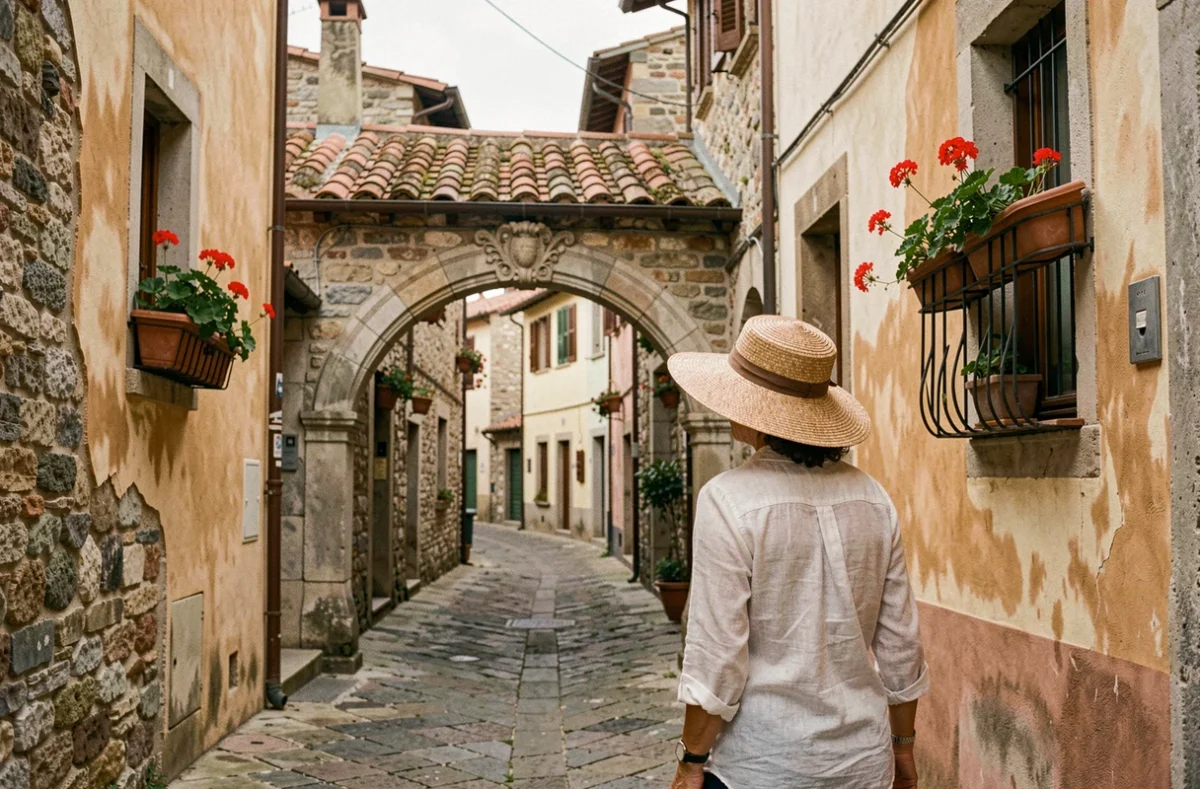
Pietra d’Alba is a fictional village invented by Jean-Baptiste Andrea in his novel Veiller sur elle, winner of the Goncourt Prize 2023. The place does not appear on any map, and several articles place it either in Tuscany, in the Marches, or in Piedmont. The novel, however, situates Pietra d’Alba in Liguria, between sea and mountains.
This geographical confusion needs to be clarified before any desire to travel. The landscapes that inspired Andrea’s imagination do indeed exist, scattered throughout northern Italy.
Pietra d’Alba in Liguria: a fictional village, not on the map
Andrea describes a stone village clinging to the Ligurian hills, bathed in slanting light and surrounded by olive trees. This setting borrows its features from several real locations along the coast and in the Ligurian hinterland. Finalborgo, the former capital of the Marquisate of Finale, offers medieval alleys and ochre facades that echo the descriptions in the novel. Dolceacqua, dominated by the ruins of the Doria castle, shares this suspended atmosphere between built heritage and wild nature.
Wanting to visit Pietra d’Alba in Italy is therefore akin to reconstructing a literary itinerary rather than following a GPS. It is precisely this gap between fiction and real geography that gives the journey its interest: one seeks sensations, not an address.
Alba and the Langhe: the real heritage behind the name
The name “Pietra d’Alba” inevitably refers to the city of Alba, in Piedmont. Alba is not the village from the novel, but the association is too frequent to be ignored. The city exists, it is rich, and it deserves a detour for reasons that have nothing to do with fiction.
An invisible archaeological heritage
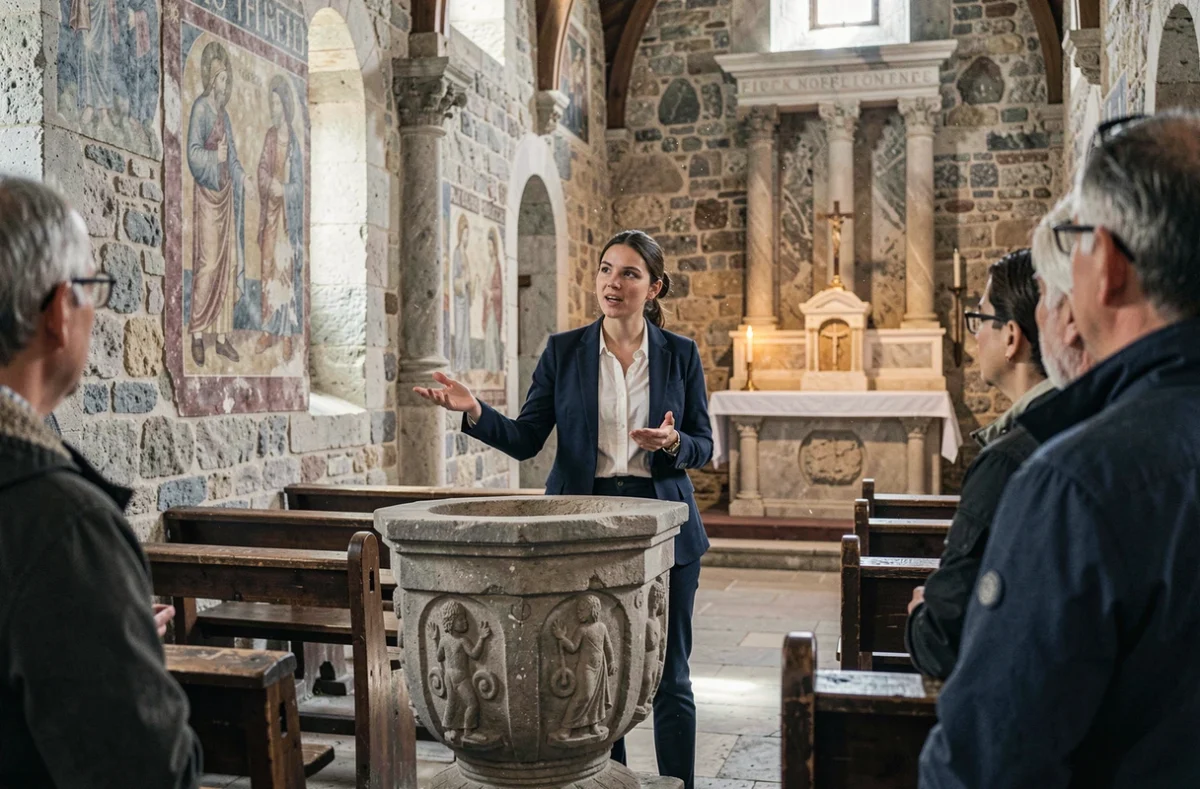
Beyond the medieval towers visible from via Vittorio Emanuele, Alba hides lesser-known remains. The European Heritage Days offer routes dedicated to archaeological sites usually closed to the public. These visits allow one to understand the Roman and medieval occupation of the city through excavations rarely highlighted by traditional tourist guides.
Langhe: classified hills and tourist pressure
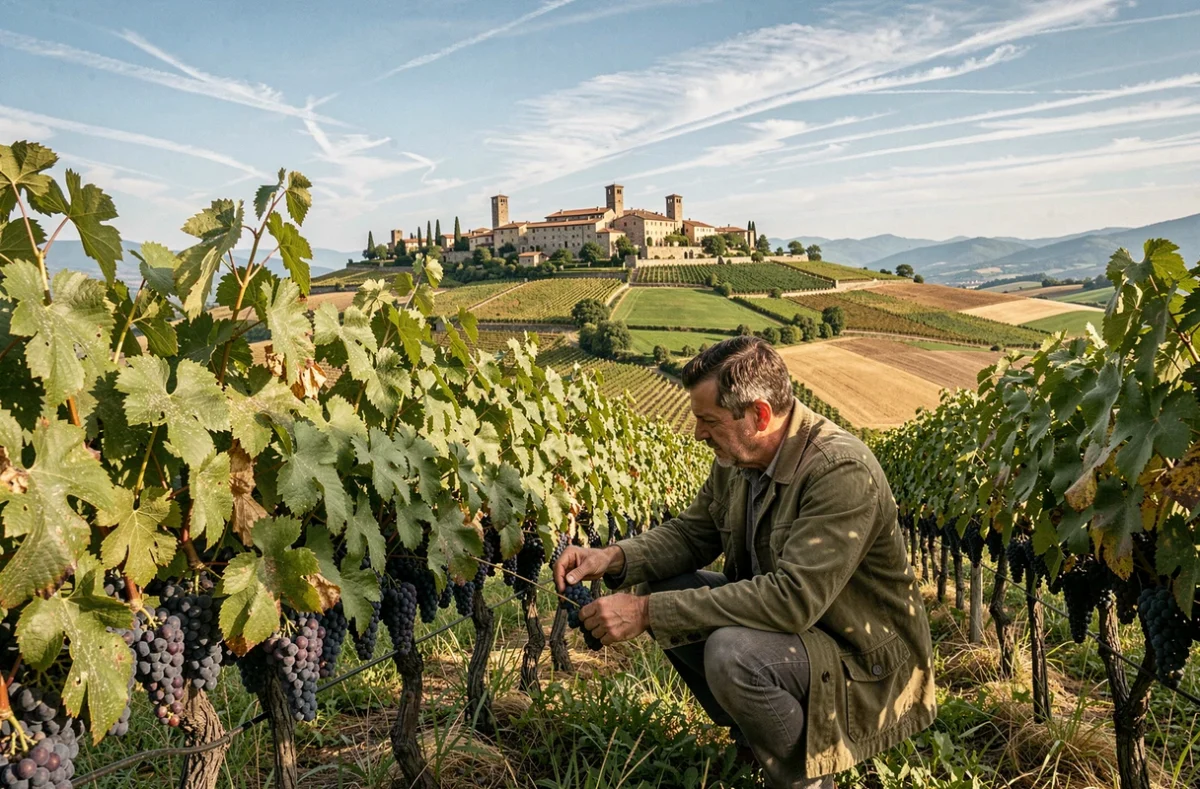
The Langhe hills, surrounding Alba, form a wine-growing landscape recognized as a World Heritage site. The white truffle of Alba and Barolo wines attract an increasing number of visitors each year.
This attractiveness has a downside. The supply of short-term rentals has significantly increased since 2016 in the Alba area, with a particularly marked rise in Airbnb-type accommodations. The consequences are tangible: tensions on rents, housing difficulties for residents, erosion of the local commercial fabric. Preparing a stay in the Langhe means taking this reality into account, if only in the choice of accommodation.
Preserved nature between Liguria and Piedmont: what makes it worth the trip
Northwest Italy concentrates, within a limited perimeter, a diversity of natural environments that Andrea’s novel captures in fragments. Here are the concrete elements that justify exploring this area.
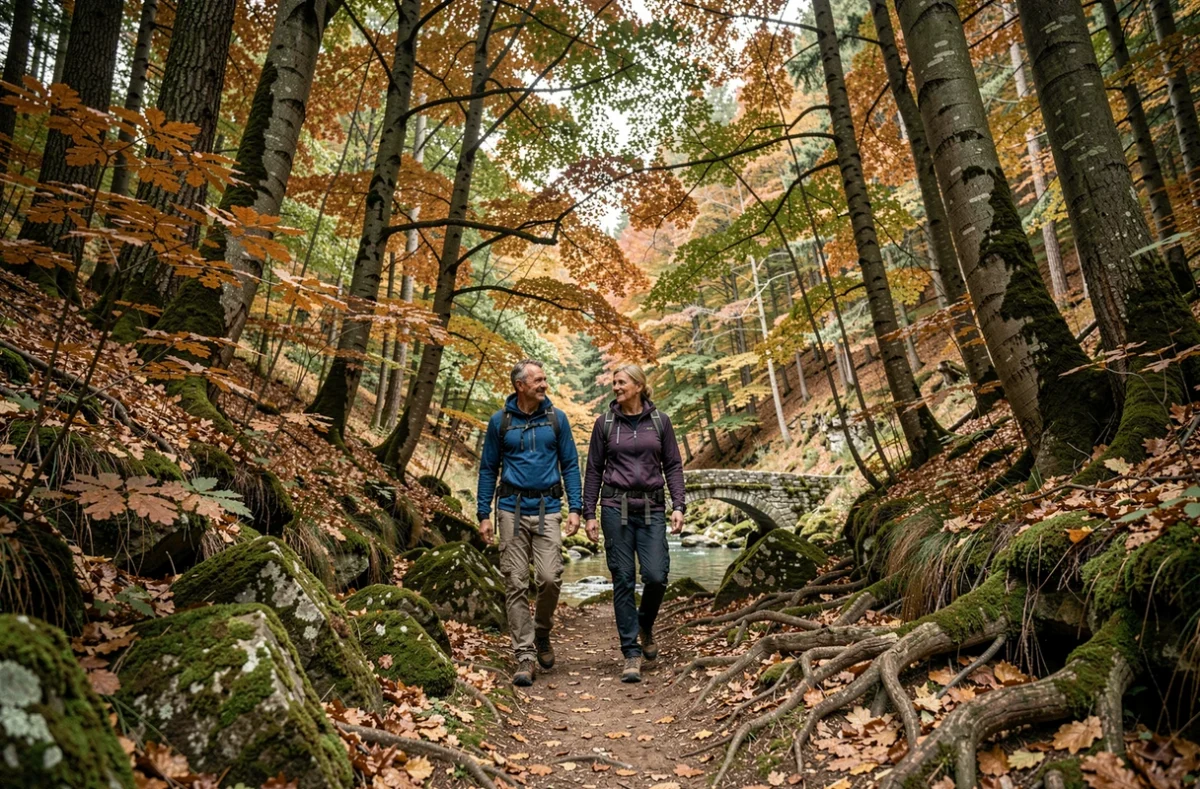
- The Ligurian hinterland offers hiking trails connecting perched villages to the coast, with moderate elevation changes and dense Mediterranean vegetation (olive trees, holm oaks, maquis).
- The Piedmontese Langhe present a landscape of cultivated hills where vineyards and hazelnut trees alternate, creating an agricultural landscape of almost graphic regularity.
- The transition zones between Liguria and Piedmont host notable forest biodiversity, with species that change within a few kilometers depending on altitude and exposure.
This contrast between the Ligurian coast and Piedmontese hills is one of the major attractions for hikers and nature lovers. A stay of a few days allows one to move from one universe to another without long journeys.
Literary itinerary around Pietra d’Alba: building your own route
Rather than searching for a village that does not exist, the most satisfying approach is to compose an itinerary based on the real places that inspired the novel. Turin serves as the logical gateway, accessible in just over an hour’s flight from France.
From Turin, the road to Alba crosses the Langhe in about an hour. From there, reaching Liguria via the inland roads adds an extra dimension to the journey. The villages of the Ligurian hinterland (Finalborgo, Noli, Dolceacqua) can be explored on foot, taking the time to observe the local stone architecture that clearly inspired Andrea.
- Plan for at least three days to alternate between built heritage, hill walks, and leisurely gastronomic discovery.
- Prefer accommodations with locals or agritourism rather than short-term rental platforms, to limit pressure on local housing.
- Consult the calendars of heritage events (Heritage Days, Palio degli Asini in Alba) to enrich the stay with concrete cultural grounding.
Pietra d’Alba remains a fictional invention, but the places that inspired it offer exactly what the novel promises: warm stone, silent hills, and a heritage that is worth the effort. The traveler who is willing to search without precise coordinates will find, between Liguria and Piedmont, a less frequented and denser northern Italy than the classic circuits.