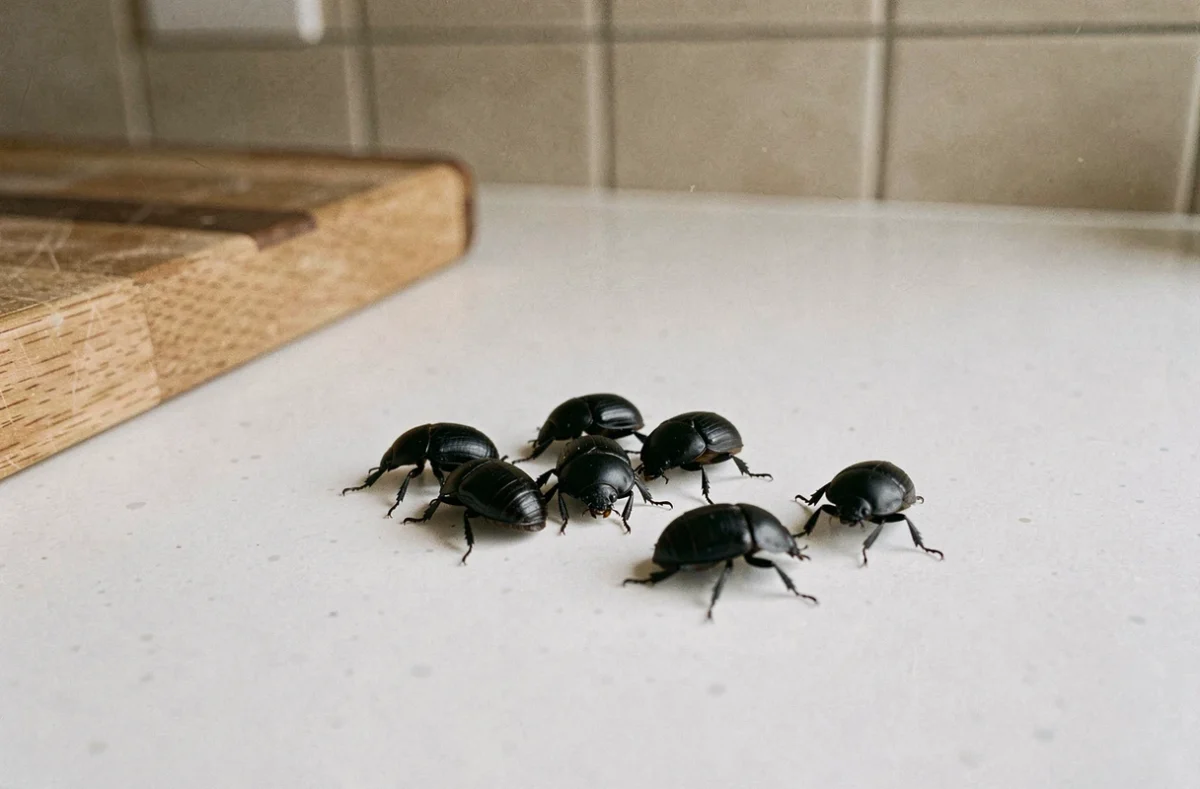
A small round beetle, black or brown, a few millimeters long, found on a windowsill or at the foot of a wardrobe: in most cases, it is an anthrenus, an insect from the Dermestidae family. This discreet pest is distinguished from cockroaches, fleas, or bedbugs by its rounded oval shape, small size, and attraction to natural fibers.
Precisely identifying the species determines the entire subsequent approach: treating an anthrenus is completely different from treating a weevil or a wood beetle.
Anatomy and life cycle of the anthrenus: understanding to act better
The adult anthrenus measures between two and five millimeters. Its body is oval, slightly rounded, with elytra often sprinkled with tiny colored scales visible under magnification. The dominant color varies from solid black to marbled brown depending on the species (Anthrenus verbasci, Anthrenus museorum, or Attagenus pellio).
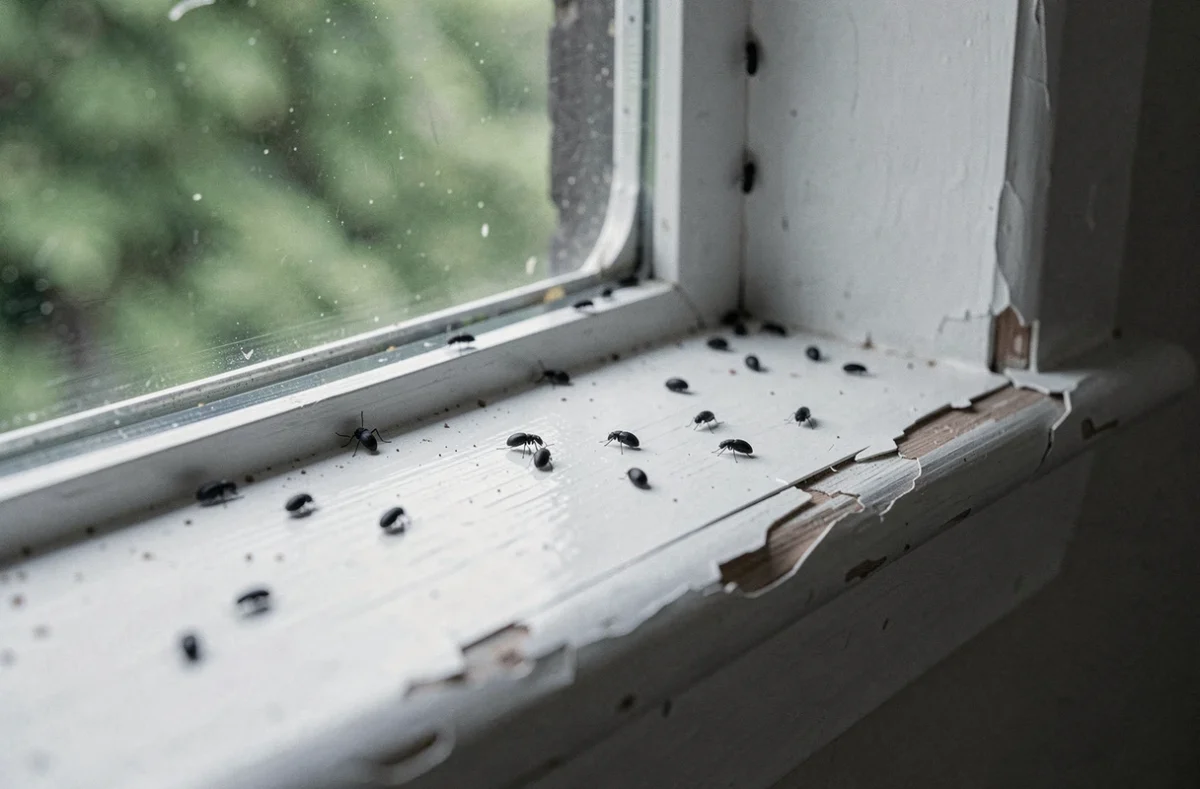
The adult flies and primarily feeds on pollen. It enters the home through open windows or via bouquets of dried flowers. Spotting small round black insects in the house in spring, often near light sources, actually indicates a population of larvae that has been established for several weeks.
It is the larva that causes the damage. Hairy and brownish, it feeds on keratin and animal fibers: wool, silk, fur, feathers, leather, but also collections of mounted insects or piano felt. The larva, not the adult, is responsible for the holes in textiles. Its larval cycle lasts several months in a calm and dark environment, which explains why the infestation progresses for a long time before being detected.
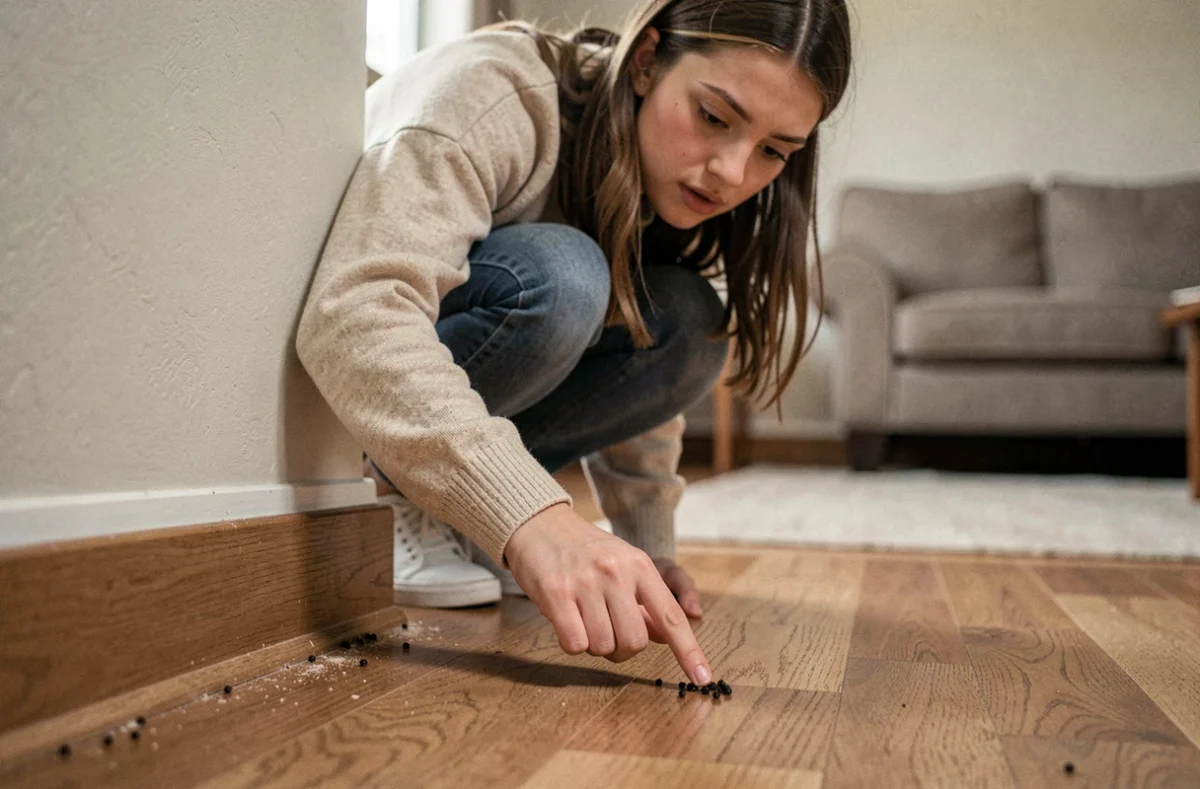
Anthrenus, weevil, or dermestid: differentiating round black insects in the home
Several species of small black beetles coexist in French homes. Confusing an anthrenus with a wheat weevil or a larder beetle radically changes the area to inspect and the treatment to apply.
Quick distinguishing criteria
- Anthrenus: rounded oval body, presence near textiles and windows, hairy larvae in closets or under baseboards. Does not bite, does not jump.
- Weevil (Sitophilus granarius): characteristic elongated snout, found in food reserves (rice, pasta, flour). Body more elongated than round.
- Larder beetle (Dermestes lardarius): slightly larger, light band on the elytra, attracted to dried animal materials (leather, ham, pet food).
- Woodworm (Anobium punctatum): round holes in antique furniture, fine sawdust on the floor, cylindrical and not rounded body.
The discovery location remains the best clue. A round black insect in the kitchen points to a food pest. The same insect in a dressing room or near a wool rug indicates an anthrenus or dermestid.
Eliminating round black insects: step-by-step method before any insecticide
The recommended approach follows a logic of integrated pest management: identify the species, eliminate its resources, then treat specifically only if the infestation persists. Spraying an insecticide randomly does not solve anything and may expose occupants to unsuitable substances.
Inspection and elimination of sources
Start by locating the larval nest. Empty the wardrobes, inspect the seams of wool clothing, the undersides of rugs, the corners of closets, and ventilation ducts. Anthrenus larvae concentrate where dust and fibers accumulate without being disturbed.
Thorough vacuuming of infested areas, including baseboards and floor cracks, removes a large portion of larvae and eggs. Immediately dispose of the vacuum bag in a sealed bag to prevent any recolonization.
Washing affected textiles at high temperatures (beyond the survival threshold of larvae) or placing them in the freezer for several days destroys any remaining larval stages.
Targeted treatment if the infestation persists
When vacuuming and washing are insufficient, a localized insecticide treatment may be considered. In France, any biocidal product intended for pest control must have authorization corresponding to the intended use, and Anses is involved in the authorization process. The product label specifies doses, application areas, and precautions: adhering to them is not optional.
Fumigants sold in supermarkets treat the air volume but do not reach larvae buried in fibers or cracks. Their effectiveness on anthrenus remains limited, and their use unnecessarily exposes occupants, children, and pets.
Certibiocide and professional intervention: when to call a specialist
A professional is justified when the infestation affects multiple rooms, when the damaged textiles have significant value (antique rugs, collections), or when home treatments have failed after several weeks of monitoring.
Since January 1, 2024, the Certibiocide system has been reorganized. The “pests” type certificate concerns professional insecticides (category TP18). It is an individual certificate held by the technician, not a global approval of the company. Checking that the intervenor holds this valid certificate is a concrete criterion for assessing the seriousness of a service.
A qualified intervenor begins with a precise diagnosis of the species, assesses the extent of the infestation, proposes an adapted protocol, and plans a follow-up check. This approach differs from simple generalized spraying.
Long-term prevention relies on simple actions: regularly airing closets, vacuuming textile corners at least once a month, storing wool clothing in airtight covers, and monitoring windowsills upon the return of spring. Spotting an adult anthrenus early, before the larvae settle in, remains an easy problem to contain.