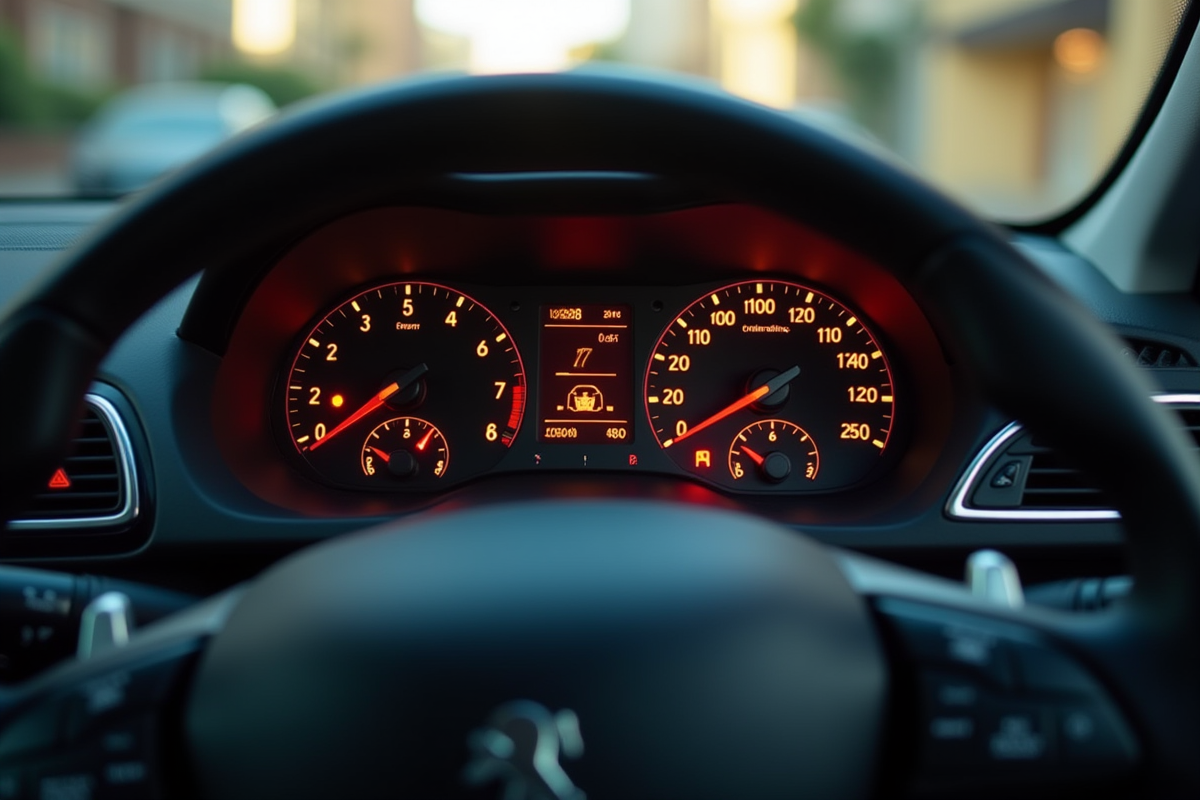
The Peugeot 208, a popular city car known for its elegant design and performance, is packed with advanced features. However, to fully enjoy your vehicle, it’s important to know how to interpret the signals it sends you.
Whether it’s a warning light on the dashboard or a distinct sound, each signal has a specific meaning. Ignoring these warnings can lead to more serious problems, even costly breakdowns. Understanding these indicators not only ensures your safety but also optimizes the longevity of your Peugeot 208.
The different types of warning lights on the Peugeot 208 dashboard
Understanding the different types of warning lights on the Peugeot 208 dashboard is essential for keeping your vehicle in good working order. These lights are divided into three main categories: red lights, orange lights, and green and blue lights.
Red lights indicate serious issues that require immediate attention. Among them are:
- Brake warning light: alerts you to a problem with the braking system or insufficient brake fluid level.
- Airbag warning light: indicates a failure of the airbags, compromising safety in the event of an accident.
- Engine warning light: often related to a serious issue requiring thorough diagnostics.
Orange lights suggest less urgent anomalies but should be monitored. These lights include:
- Tire pressure warning light: indicates inadequate tire pressure, affecting handling and fuel consumption.
- Low beam warning light: signals a malfunction of the low beams, requiring quick verification.
- ESP: informs of a potential failure in the stability control system.
Green and blue lights are generally informational. They include:
- Turn signal indicator: confirms the proper functioning of the turn signals.
- High beam indicator: indicates that the high beams are activated.
For a detailed understanding of each light on the Peugeot 208 dashboard, refer to the ‘List of Peugeot 208 Warning Lights: Complete Guide – Car Auctions’. Understanding these lights not only ensures your safety but also optimizes the longevity of your Peugeot 208. Consider each signal as valuable information to anticipate and resolve potential issues. 
How to react to warning lights on your Peugeot 208
When one of the lights on your Peugeot 208 comes on, it’s important to react appropriately. Each light has its own meaning and requires specific action. Here are some guidelines for an adequate response to the different lights.
Red lights:
- Brake warning light: Stop immediately and check the brake fluid level. If the problem persists, consult a professional.
- Airbag warning light: Consult a mechanic without delay. A failure of the airbags can compromise your safety in the event of an accident.
- Engine warning light: This light often indicates a serious problem. Visit a garage for a complete diagnosis.
Orange lights:
- Tire pressure warning light: Check the tire pressure as soon as possible. Inadequate pressure affects not only handling but also fuel consumption.
- Low beam warning light: Ensure that the low beams are functioning correctly. A quick check is necessary to guarantee your visibility and that of other drivers.
- ESP: This light indicates a potential failure of the stability control system. Consult a professional for a detailed inspection of the system.
Green and blue lights:
- Turn signal indicator: This light confirms the proper functioning of the turn signals. No immediate action is necessary, but remain vigilant in case of malfunction.
- High beam indicator: Check that the high beams are turned off when you meet another vehicle to avoid dazzling.
If in doubt, do not hesitate to consult your Peugeot 208 manual or contact a professional. The warning lights are there to alert you and allow you to take the necessary measures to ensure your safety and that of your vehicle.