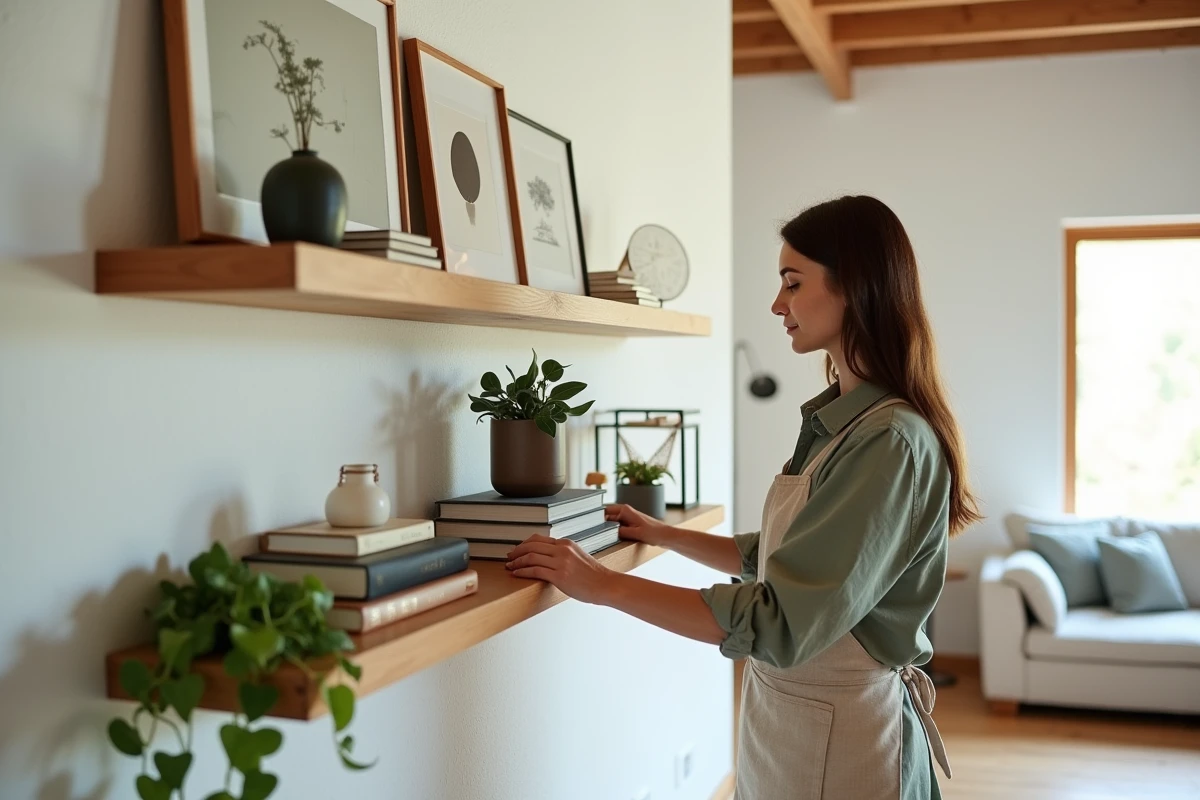
Furnishing a house is not just about choosing furniture and arranging it in a room. Every decision, from wall coverings to light sources, alters the perception of a space, its comfort, and even the quality of the air breathed on a daily basis. Decorating creatively requires understanding a few technical principles before diving into purchases.
Indoor air quality and material choices for decoration
Paints, adhesives, flooring, and certain furniture emit volatile organic compounds (VOCs) that degrade indoor air quality. In France, national requirements regulate the VOC emissions of construction and decoration products, and labels like HQE or WELL incorporate these criteria into housing evaluations.
This technical point is rarely addressed in decor inspiration articles. However, it conditions concrete choices: a pollutant-reducing mineral paint, a floor glued with low-emission adhesive, or a certified recyclable textile can change the atmosphere of a room as much as their color or texture.
The so-called regenerative decoration approach goes beyond the simple “eco-responsible” reflex. It favors materials that actively improve air quality (lime-based paints, clay plasters) and textiles designed to be recycled in a loop.
Before choosing a shade for the living room, checking the product’s emission label (rated from A+ to C) already steers the project in the right direction. To discover the house on Les Bricoleries de Nanie, practical resources allow for a deeper exploration of these furnishing questions.
Color and light: two levers that transform the perception of a space
Color should not be chosen from a swatch laid flat under a store’s neon light. The same shade appears warmer under a low-temperature bulb and cooler under white lighting. Testing a sample directly on the wall in question, at different times of the day, avoids disappointments after application.
Rule of colored proportions
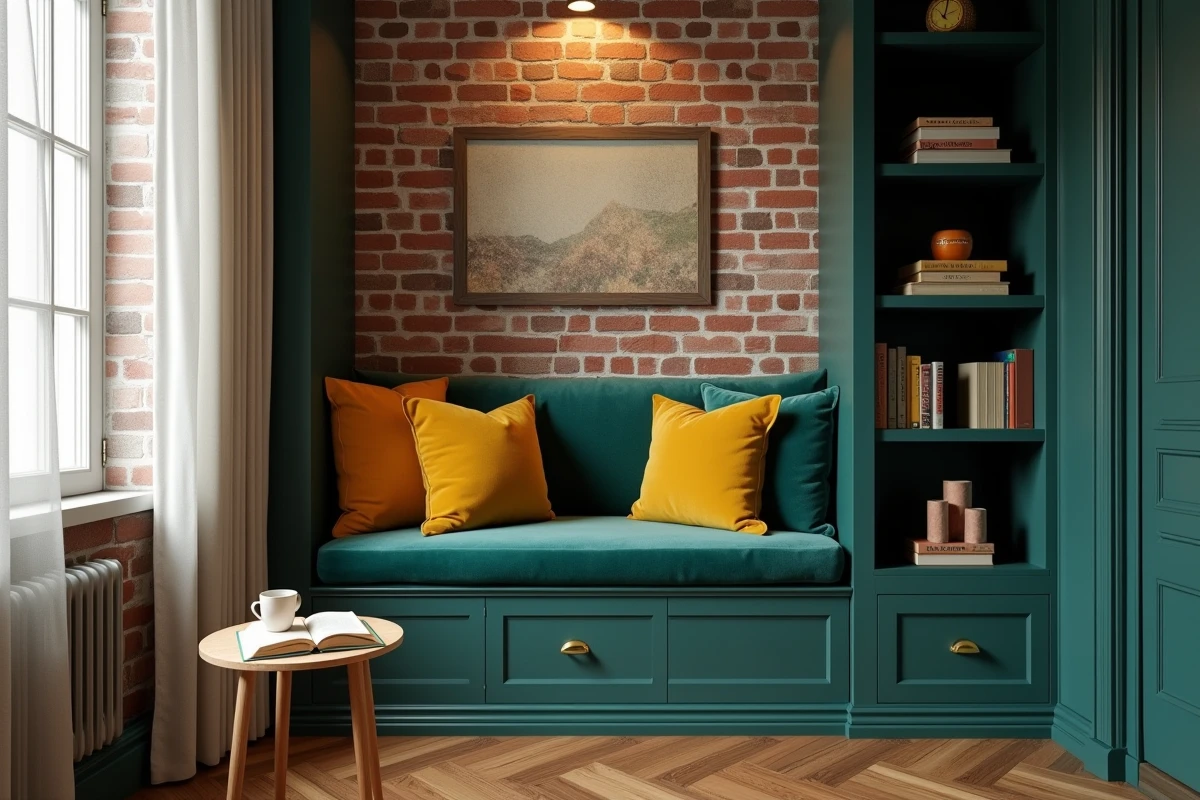
A simple principle structures the choices: a dominant color covers the majority of surfaces (walls, floor), a secondary color dresses the main furniture, and an accent color appears in touches (cushions, vase, frame). Three shades are enough for a coherent room. Beyond that, the risk of visual saturation increases.
Natural and artificial light in each room
Natural light dictates the orientation of furniture. A sofa placed with its back to the window casts a shadow on the reading area. A desk facing the light generates reflections on the screen.
For artificial light, layering three levels works well in a living room or bedroom:
- A diffuse general lighting (ceiling light, pendant) that covers the entire room without marked shadow areas
- A targeted functional lighting (desk lamp, reading light) for specific activities like reading or working
- An ambient lighting (string lights, table lamp with dimmer) that changes the atmosphere in the evening
This breakdown adapts to both the kitchen and the bathroom. In a kitchen, functional lighting under the upper cabinets replaces the reading light. In a bathroom, a light strip around the mirror avoids shadows on the face.
Micro-decor trends and sustainable decisions
TikTok has become a major source of inspiration for decoration, especially among 18-34 year-olds. Aesthetics like cluttercore (deliberate accumulation of objects), candle minimalism, or cozy maximalism appear and disappear within months.
The trap: buying cheap items to fit a fleeting trend, then replacing them with the next micro-trend. This cycle generates waste and a significant cumulative budget without sustainably improving the living environment.
A useful filter before any decorative purchase is to distinguish between structural elements and modular elements:
- Structural elements (wall paint, flooring, main lighting fixtures) deserve thoughtful investment and neutral or timeless choices
- Modular elements (cushions, throws, posters, small objects) absorb current desires without committing to renovations
- Furniture falls between the two: a sofa or dining table lasts several years, while a lightweight shelf can be easily replaced
This distinction allows for following current inspirations on Pinterest or TikTok without compromising the overall coherence of the living room or bedroom.

Furnishing room by room without overcrowding the space
Overcrowding is the most common flaw in a decoration project carried out without a plan. Each room has a main function, and the furniture must serve this function before decorating.
Living room and living space
The living room often combines several roles: relaxation, meals, work, play for children. Visually delimiting areas (a rug under the sofa area, a different light above the table) structures the room without partitioning.
Bedroom and children’s room
In a bedroom, limiting furniture to the bed, a bedside table, and closed storage frees up floor space. For a children’s room, providing storage accessible at the child’s height reduces daily clutter and facilitates autonomy.
Kitchen and bathroom
These are the rooms most constrained by plumbing and electricity. Realistic decorative changes focus on cabinet handles, countertops, adhesive wall tiles, or faucets. These inexpensive modifications radically change the appearance of a kitchen or bathroom without heavy renovations.
The garden or terrace extends the house. Well-placed outdoor lighting and a few plant containers are enough to create a coherent transition between indoors and outdoors.
A successful decoration project relies less on the budget than on the method: checking materials, mastering light, resisting impulsive purchases. The rest is a matter of personal taste, and that is precisely what makes each interior different.