
A swimsuit that is tight at the hips, chest, or crotch poses a real problem: discomfort, marks on the skin, and difficulty in movement. Since January 2026, EU regulation 2025/2789 requires manufacturers to indicate on the label the sensitivity to shrinkage after washing. This mention helps to anticipate the problem, but does not solve it when the swimsuit is already too tight.
The synthetic fibers used in most swimsuits (nylon, polyester, elastane) react differently to heat, chlorine, and salt. Understanding these reactions allows for the selection of the right method to relax a swimsuit without weakening it, and especially to measure what these manipulations cost the fabric over time.
Nylon-elastane fabric and chlorinated water: what happens at the fiber level
When a swimsuit is worn in a pool, chlorine gradually attacks the chemical bonds of elastane. The fabric loses its natural elasticity, creating a paradox: the swimsuit may feel tighter after several swims because the fiber no longer returns to its original shape in the same way.
A comparative test published by Triathlete Magazine in February 2026 shows that nylon-elastane compression fabrics significantly relax after prolonged immersion in chlorinated water. Triathlon swimsuits, designed to withstand these conditions, incorporate specific fiber ratios. A classic swimsuit does not have this resistance.
For those who wish to enlarge a too-tight swimsuit, the first step is to identify the exact composition of the fabric. The label indicates the percentage of elastane: the higher this percentage, the more the swimsuit will respond to gentle stretching techniques.

Warm water softening methods: salt water or white vinegar
The most common technique is to immerse the swimsuit in warm water for about twenty minutes, then gently stretch it by hand in the tight areas. The question is: what additive to use in the water to facilitate the loosening of the fibers without damaging the color?
Warm salt water rather than vinegar
A field survey published by the French Swimming Federation in April 2026 indicates that professional swimmers prefer warm salt water to white vinegar for softening their swimsuits. Vinegar, often recommended, poses a risk of discoloration on dyed technical fabrics.
Salt dissolved in warm water relaxes the fibers without harming the pigments. The method remains gentle and does not alter the fabric’s structure deeply. However, it only produces a modest increase in size, on the order of half a size at most.
Stretching on a rigid form
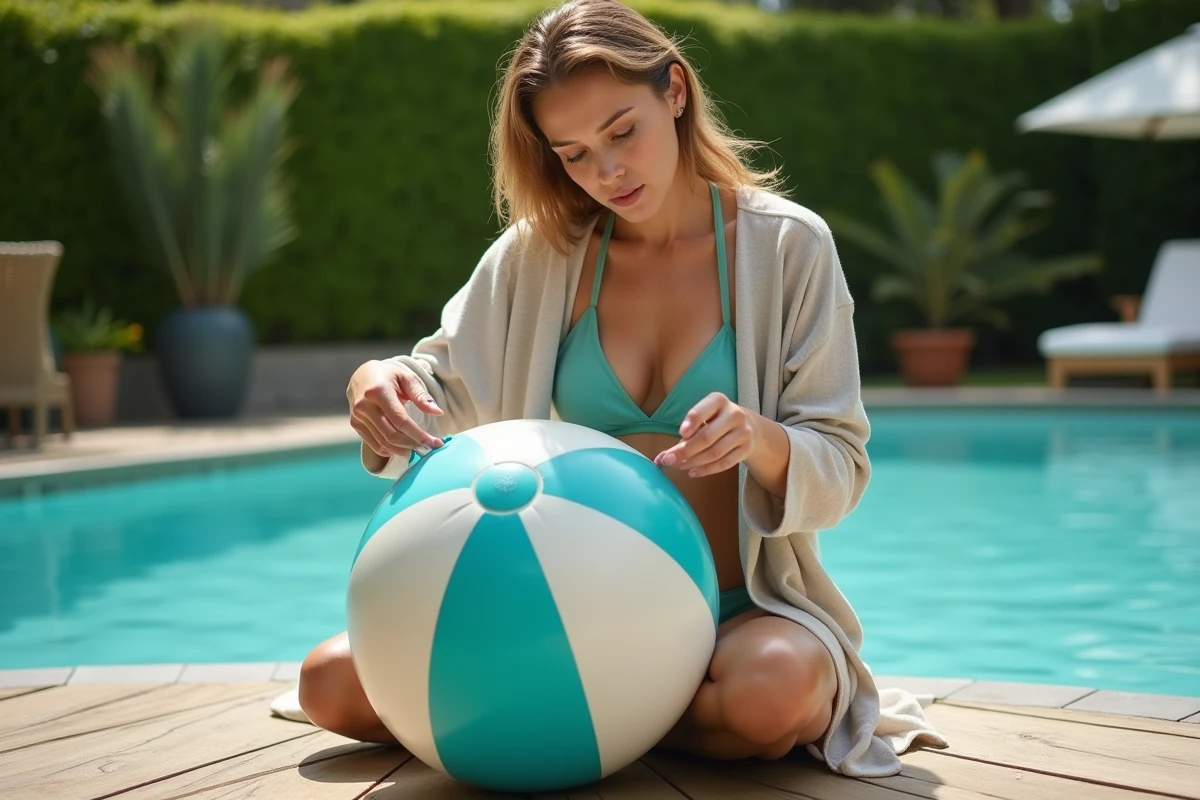
Another approach is to put the damp swimsuit on a rigid object (ball, firm cushion) slightly larger than the area to be widened, then let it air dry. This method yields more visible results on the bottom of the swimsuit than on the top.
- Immerse the swimsuit in warm salt water for fifteen to twenty minutes, without exceeding thirty degrees to avoid contracting the fibers.
- Gently stretch the fabric flat in the desired direction, without pulling harshly on the side seams.
- Place the still damp swimsuit on a rigid form and let it dry in the shade, away from any direct heat source.
Consequences of home remedies on the durability of the swimsuit
This is the point that advice articles rarely address in detail. Every manipulation that stretches the elastane fibers beyond their resting tension reduces the fabric’s ability to return to its original shape. The swimsuit gains immediate comfort but loses support over time.
After several cycles of stretching and drying, the fabric may show areas of uneven relaxation. The side seams and crotch are the first areas to give. On a one-piece swimsuit, deformation can create an unflattering pouch effect at the belly or buttocks.
Repeated exposure to chlorinated or salty water after modification accelerates this process. An artificially stretched swimsuit loses its shape two to three times faster than a swimsuit worn at its original size, according to field reports collected by the FFN. The available data does not allow for precise quantification of the remaining lifespan, but field feedback converges on one point: home modification is a quick fix, not a sustainable solution.
Swimsuits made from recycled fibers: better tolerance to stretching
The annual report from IFTH (French Institute of Textile and Clothing) published in March 2026 notes that swimsuits made from recycled fibers withstand home enlargement methods better. Their elasticity, enhanced compared to classic virgin fibers, allows them to absorb moderate stretching without losing as much support.
This characteristic is explained by the manufacturing process of recycled yarns, which produces a fiber that is slightly softer in its new state. The fabric tolerates variations in tension better, making it more suitable for manual adjustments.
However, even these swimsuits have their limits. Repeated stretching beyond half a size eventually degrades the fabric’s compression, with the same consequences as on a classic swimsuit: loss of support, deformation at the seams, accelerated aging in chlorinated environments.
Knowing when to replace rather than adjust
Modifying a swimsuit makes sense when the size difference is minimal and the swimsuit is recent. Beyond half a size difference, or if the fabric already shows signs of fatigue (pilling elastane, increased transparency, seams that are buckling), stretching will worsen the problem.
- If the swimsuit has more than two seasons of regular use in the pool, the elastane fibers are likely already degraded by chlorine.
- If discomfort is concentrated on the straps or the underwire of the top, no stretching technique will correct an issue with ill-fitting cups.
- If the composition indicates less than fifteen percent elastane, the fabric does not have enough elastic memory to be stretched without permanent deformation.
The mandatory labeling imposed by the European regulation of 2026 now facilitates this diagnosis. Checking the sensitivity to shrinkage before purchase remains the most reliable way to avoid having to modify a swimsuit afterward. A well-chosen swimsuit in the right size, maintained in cold water and dried flat, retains its comfort much longer than a swimsuit altered by hand.