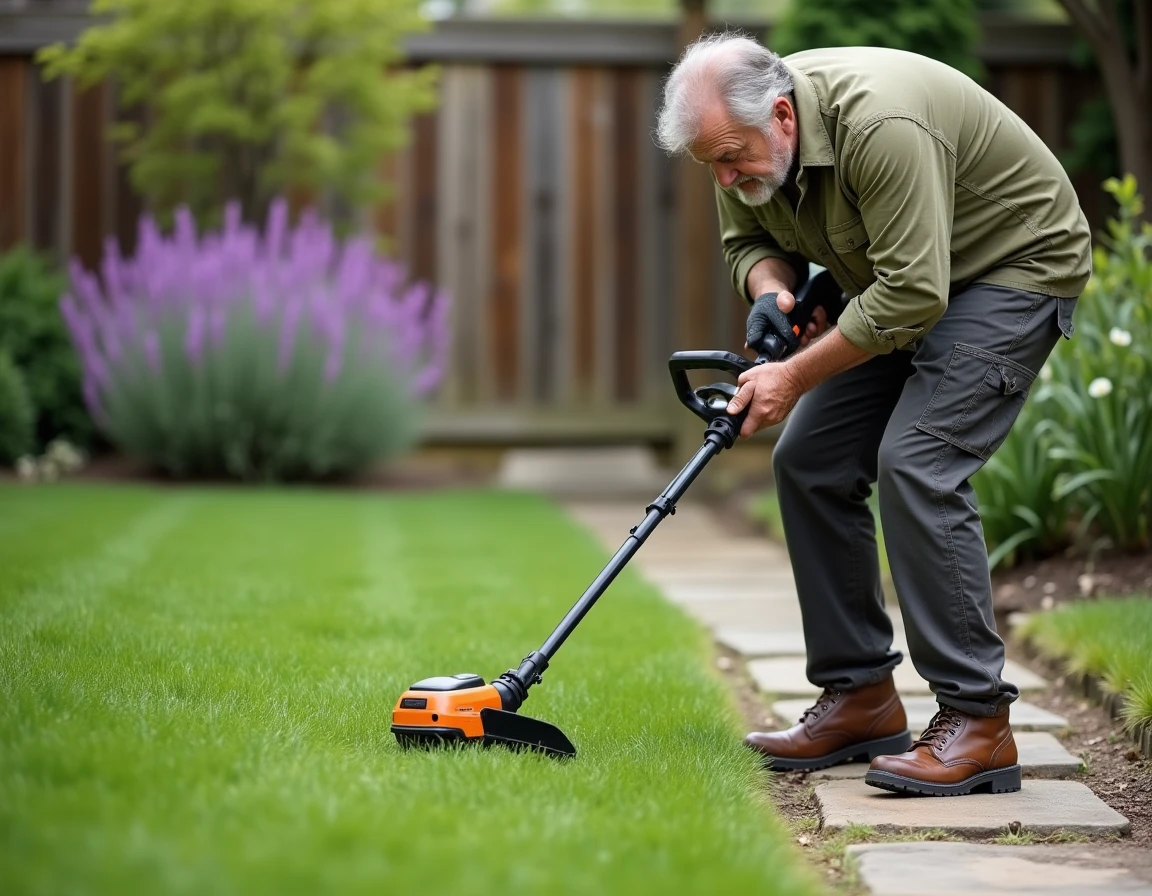
On a cordless trimmer, the wattage displayed on the packaging only tells part of the story. The useful power depends on the voltage-speed combination, and it is this duo that determines whether the device can tackle dense grass or will stall in tall grasses. Understanding this mechanics helps avoid purchasing mistakes, especially when you already have a battery ecosystem.
Motor speed and useful power of a cordless trimmer

Product sheets highlight the voltage (18 V, 36 V, 40 V) and sometimes the wattage. They almost always omit the rotation speed, which is the true indicator of cutting efficiency. A motor running at 8,800 RPM on an 18-20 V machine cuts standard edges without difficulty. The same voltage with a speed below 7,000 RPM requires multiple passes over the same area.
We recommend always checking the motor speed in the technical specifications, not just the voltage. An 18 V machine capable of running between 8,000 and 9,000 RPM significantly compensates for its modest voltage compared to a 36 V model limited to 6,500 RPM. The motor speed partially compensates for a lower voltage, and this is where the difference between a pleasant tool and a frustrating one lies.
The question of what power to choose for a cordless trimmer cannot be resolved with just one number. It is the combination of voltage, speed, and wire diameter that forms a coherent set, or not.
Battery voltage and wire diameter: a link that guides ignore
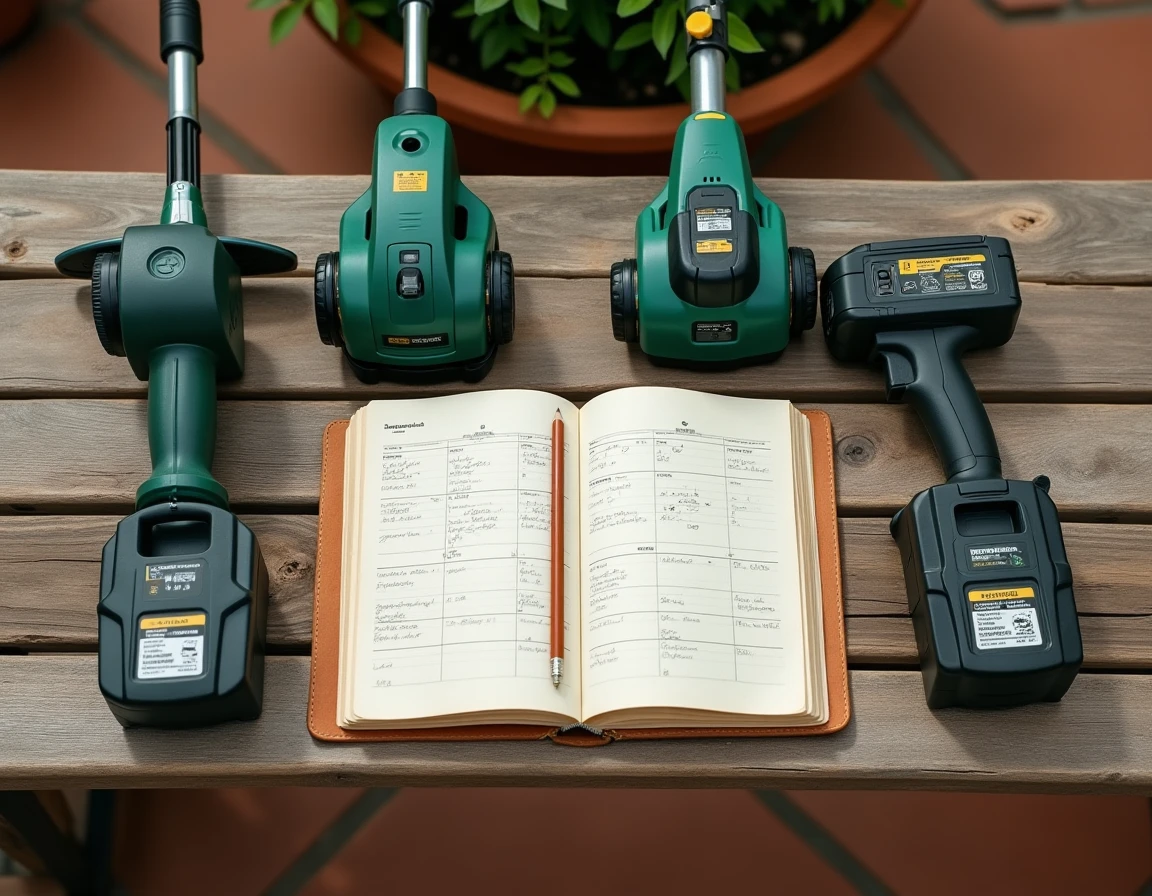
Fitting a cutting wire that is too thick on an undersized machine causes a sharp drop in motor speed. The wire no longer spins fast enough to make a clean cut; it tears and frays the vegetation. Conversely, a wire that is too thin on a powerful device wears out in a few minutes and breaks repeatedly.
Voltage-wire matching for a cordless trimmer
- Models 18-20 V generally accept a 1.6 mm wire, suitable for regularly maintained lawns and finishing along pathways
- Platforms 36-40 V properly handle a 2 mm wire, or even 2.4 mm on high-end models, allowing for tackling tall grasses and tough weeds
- A 2.4 mm wire on an 18 V is counterproductive: the motor strains, the runtime decreases, and the cut remains mediocre
Manufacturers rarely indicate this correlation explicitly. We observe that the best results are obtained by staying within the wire range recommended by the manufacturer, without trying to “overclass” the device by increasing the diameter.
Battery ecosystem: power choice also depends on compatibility
A determining criterion that general guides underestimate: the existing battery stock influences the power choice. If you use a drill, a blower, and a pruning chainsaw at 18 V, switching to a 36 V trimmer means an additional charger, new batteries, and a significant extra cost.
Major brands structure their offerings around platforms (18 V, 36/40 V, 56/60 V). Staying within the same platform allows for sharing batteries between tools. An 18 V trimmer powered by a high-capacity battery (like 4 or 5 Ah) offers very decent runtime for a medium-sized garden.
When switching to 36-40 V becomes relevant
The jump in voltage is justified in two specific cases. The first: a large area with long border zones, where the runtime of an 18 V, even well-equipped, becomes insufficient. The second: regularly thick vegetation (embankments, hedge edges, grasses going to seed) that requires a minimum 2 mm wire.
Recent selections of trimmers position the 36-40 V models as equivalents to entry-level gas-powered models in terms of torque and endurance. For purely residential use on maintained lawns, an 18-20 V with a good motor speed is more than sufficient.
Actual runtime and battery management in use
The runtime announced by manufacturers corresponds to ideal conditions: short grass, new wire, moderate ambient temperature. In real conditions, expect a notable reduction as soon as the grass is wet or the wire catches woody stems.
The battery capacity (expressed in Ah) determines the working time. A 2 Ah battery on an 18 V allows for trimming the borders of a small garden in a single charge. For larger areas, a 4 Ah battery or more becomes necessary, or you need to plan for a second charged battery.
- Favoring a high-capacity battery rather than increasing voltage reduces overall cost and complexity
- Batteries degrade faster when they are consistently fully drained: recharging before complete depletion extends their lifespan
- In cold weather (below 10 °C), runtime decreases significantly, a point to consider for late autumn mowing
The weight of the battery also influences user comfort. A high-capacity 36 V battery noticeably increases the overall weight, especially at the end of a session when muscle fatigue sets in the arms and shoulders.
Wireless trimmer: common sizing mistakes
The most common mistake is to oversize the device out of caution. Buying a 36 V to trim the edges of a terrace means paying for excess weight, extra cost, and an underutilized battery. Conversely, choosing a budget model at 18 V with a low motor speed turns every maintenance session into a chore.
The right sizing crosses three parameters: the nature of the vegetation to be cut, the total length of the edges, and the existing battery ecosystem. A well-sized device cuts in one pass without straining. If you have to go over the same spot twice, the machine is either too weak or equipped with an unsuitable wire.
The cordless trimmer remains a finishing tool. Asking it to perform as a brush cutter leads to disappointment, regardless of the chosen power. Clearly identifying your actual need is the first filter before looking at a technical sheet.